Gauge is the number of stitches and rows in a stated measurement. It connects the instructions on the page to the size of the fabric in your hands. Two people can use the same yarn and hook and still make different sized stitches, which is why checking a small sample matters when fit matters.
Follow the pattern’s gauge instructions
Look for the stitch pattern, measurement and finishing method used in the gauge notes. A gauge measured in single crochet cannot be compared directly with a swatch worked in double crochet. If the pattern gives no gauge, look for finished measurements and other sizing guidance rather than inventing a target.
For garments, use the yarn and hook you intend to use for the project. If you substitute yarn, matching the weight category alone does not guarantee the same gauge or drape.
Make room to measure the middle
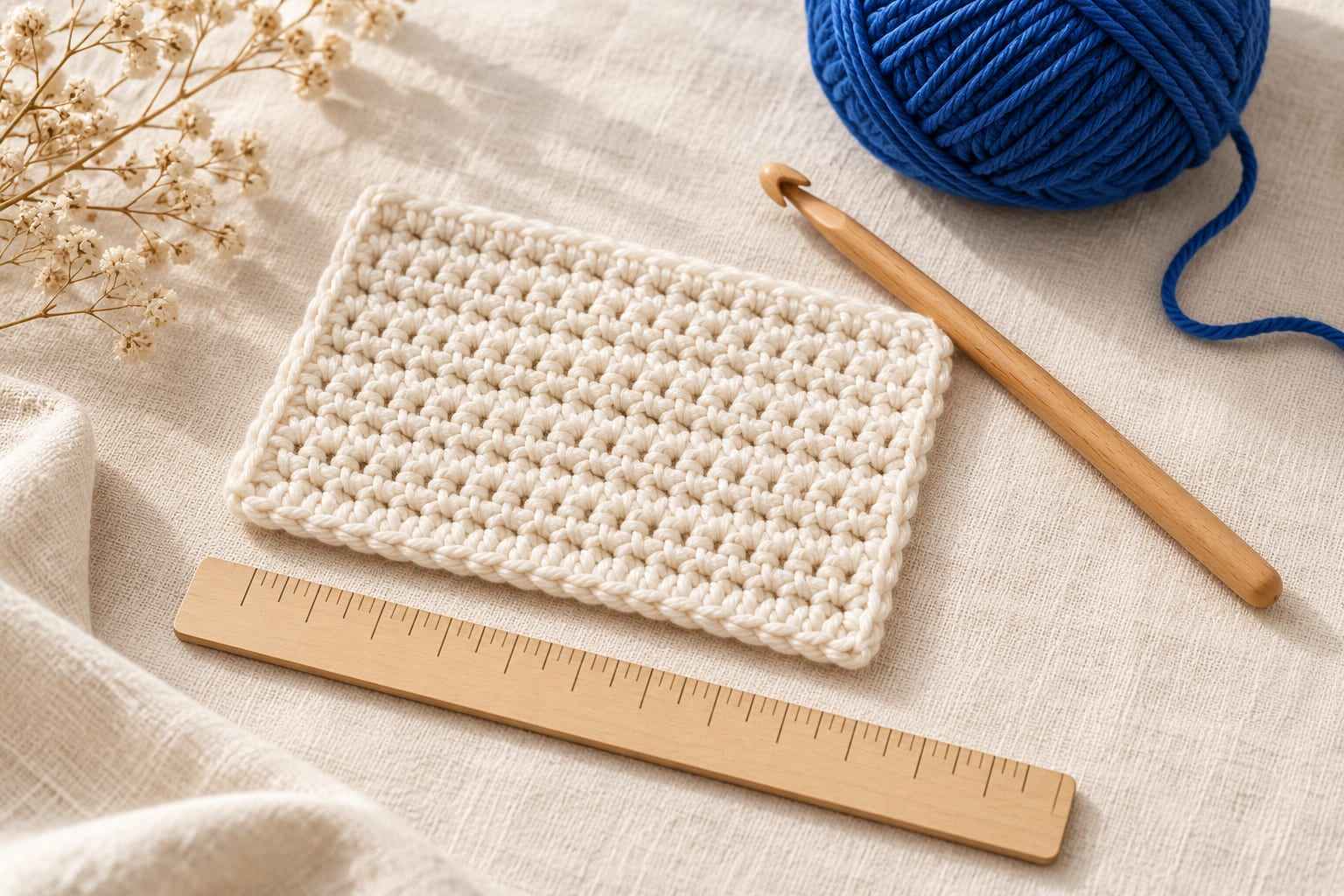
- Work the sample described by the pattern, or a larger swatch in the stated stitch pattern so the measuring area sits away from the edges.
- Finish or wash it as directed by the pattern and appropriate for the yarn. Let it dry fully before measuring.
- Lay the swatch flat without stretching it.
- Measure the stated width and count the stitches inside that span, including partial stitches.
- Measure the stated height and count the rows. Record the yarn, hook and both counts.
Edges can be distorted by turning chains or by handling the sample. Measure the middle where possible, and compare like with like: the same stitch pattern, the same span and the same finishing state.
Understand which way to adjust
| More stitches than the target | Your stitches are smaller. Try a larger hook and make another swatch. |
|---|---|
| Fewer stitches than the target | Your stitches are larger. Try a smaller hook and make another swatch. |
| Stitch count matches, row count differs | Check stitch height and the pattern’s length instructions. A hook change may affect both counts. |
Do not force an uncomfortable grip or deliberately tighten every stitch to hold a gauge. Aim for a repeatable way of working. Change one thing at a time and check the fabric as well as the count: it should have the structure and drape the project needs.
A small difference adds up
Here is a simple example, not a gauge for one of our patterns. Suppose a pattern expects 20 stitches across 10 cm. A width of 100 stitches would measure about 50 cm. If your swatch has 22 stitches across the same 10 cm, those 100 stitches measure about 45.5 cm. That is roughly 4.5 cm narrower before seams or edging.
Save it with the yarn label and a note of the hook you used. It gives you something to compare with if your tension changes halfway through the project.
Use measurements alongside the count
For a cardigan, compare the pattern’s size information with the fit you want before selecting a size. For booties, use the listed foot length rather than age alone. Check the actual work as it grows so you can notice a size problem while it is still easy to correct.