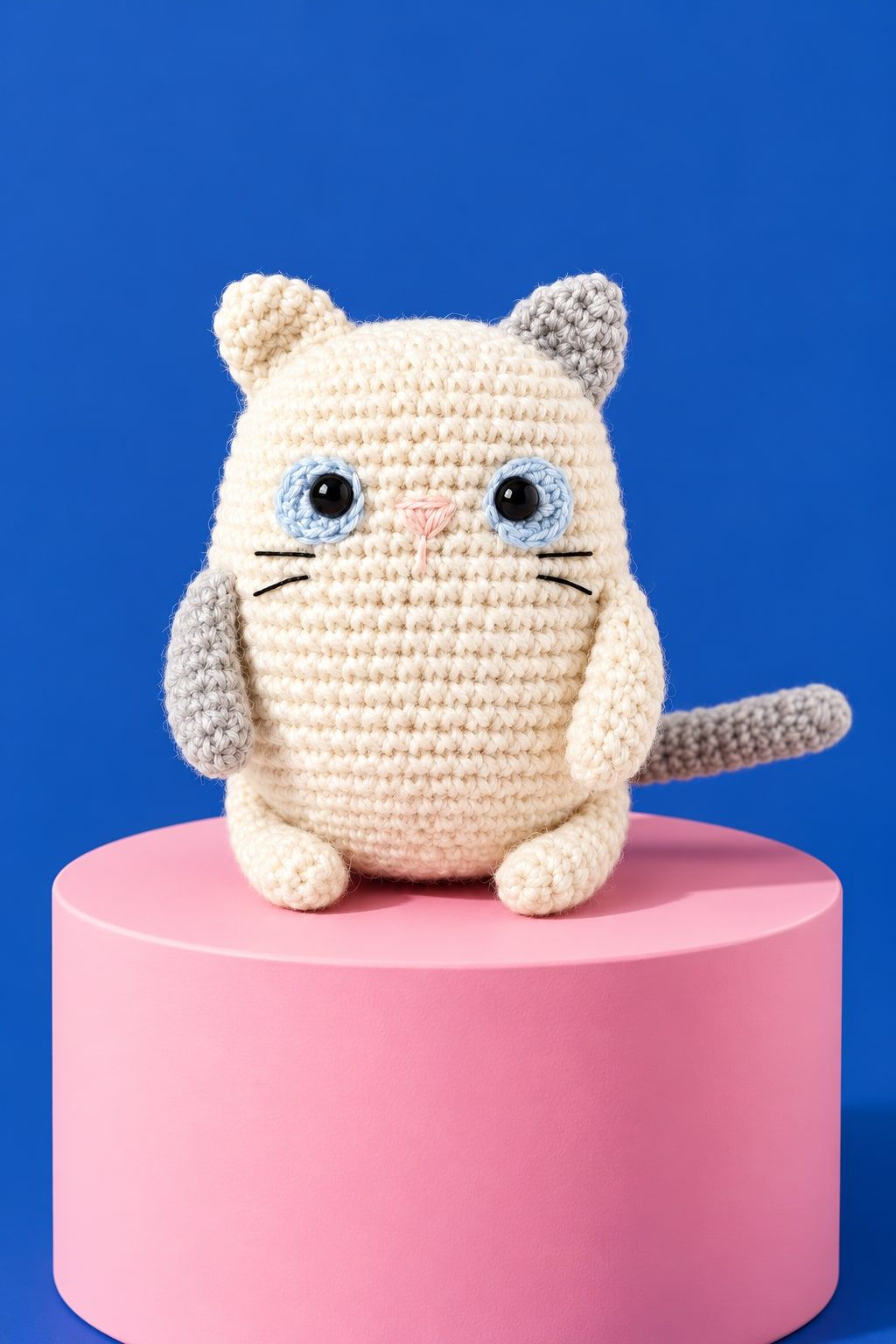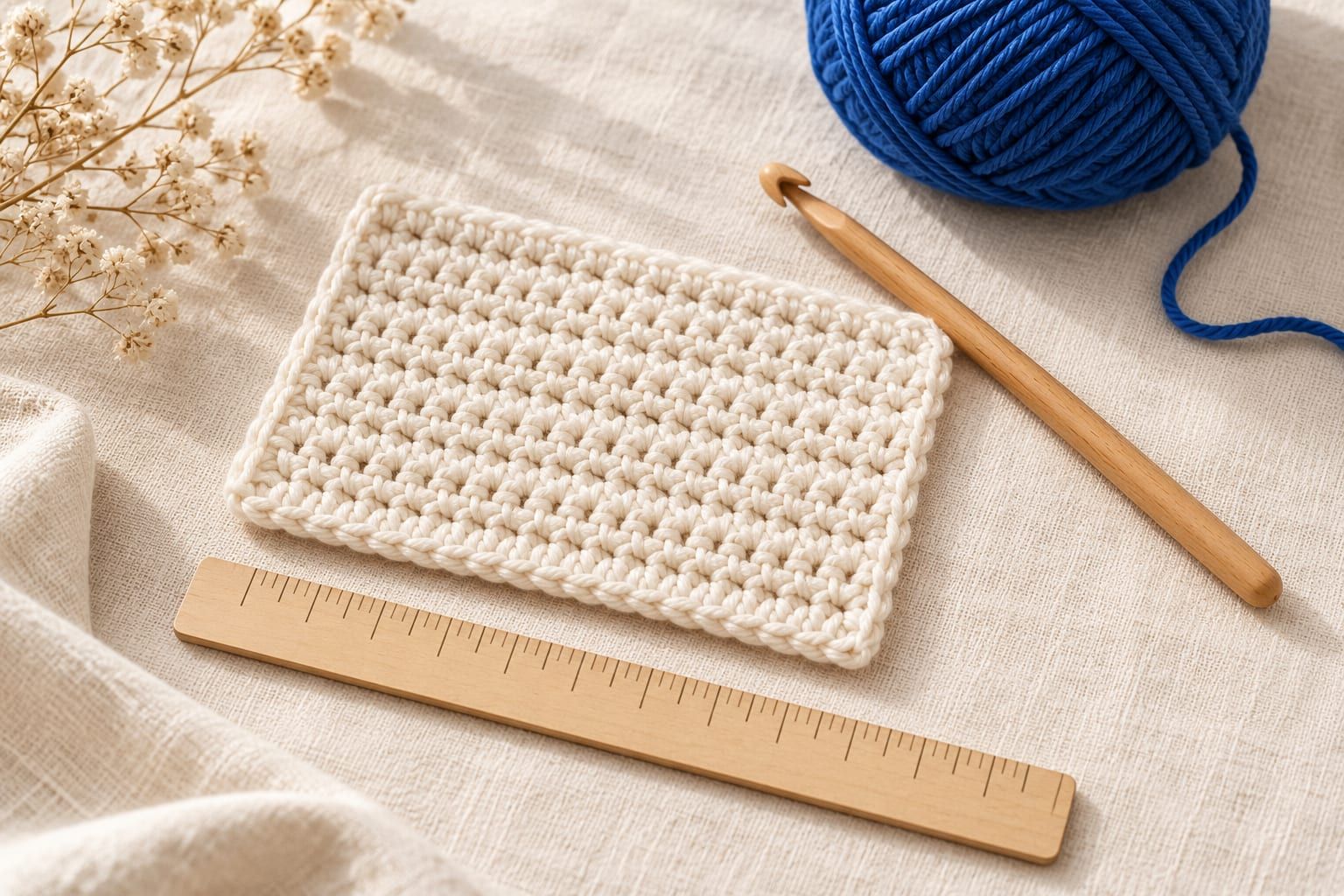
A crochet pattern is a set of short instructions, not a test of memory. Read the notes once, keep the abbreviation key nearby and work through a single line at a time. The aim is to know where to put the next stitch and how to check the row or round when you finish.
Start with the notes, not Round 1
Before starting, check the yarn, hook, sizes, gauge and construction notes. Notice whether the pattern uses rows or rounds, whether you turn the work, and whether the beginning chain counts as a stitch. These choices are specific to the pattern. Do not assume that a method from your last project applies to this one.
Check the terminology
Crochet Simplified patterns use US crochet terms. US and UK stitch names differ: a US single crochet is called a double crochet in UK terminology, and a US double crochet is a UK treble crochet. Check the terminology stated by a pattern before interpreting its abbreviations.
| ch | Chain |
|---|---|
| sl st | Slip stitch |
| sc | Single crochet, in US terms |
| hdc | Half double crochet, in US terms |
| dc | Double crochet, in US terms |
| inc | Increase, as defined by the pattern |
| dec | Decrease, as defined by the pattern |
| st or sts | Stitch or stitches |
A pattern may define a special stitch or use a particular increase or decrease. Its own abbreviation key and notes take priority over a general list.
Break a repeat into one small group
Imagine a round that begins with 18 stitches and says: work one single crochet in each of the next two stitches, then work two single crochets in the next stitch. Repeat that group six times.
- The two single crochets use two stitches from the previous round and make two new stitches.
- The increase uses one stitch from the previous round and makes two new stitches.
- One group therefore uses three old stitches and makes four new stitches.
- Six groups use all 18 old stitches and finish with 24 new stitches.
Parentheses, brackets and asterisks can mark repeats. A number at the end of a round may give the final stitch count. Read the pattern’s explanation of its symbols so you can tell a repeat from a count or a set of size options.
Count at the end of the line
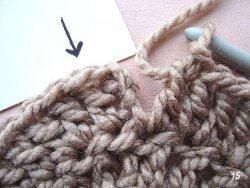
Use a removable stitch marker to identify the beginning of a continuous round. Count the stitches before moving on, using the pattern’s rule for chains and joins. If your count differs, check whether you missed a stitch, worked into the wrong loop or repeated a group too many times.
On a printed copy, circle your size and mark each completed row or round. Keep the repeat visible instead of trying to remember it while you crochet.
Read a real pattern alongside the guide
Open a pattern you want to make and identify its materials, abbreviation key and first shaping instruction. Read that instruction in full words before working it. If a line is unclear, contact us with the pattern title and the exact row or round so the question can be checked.